
Real features. Real impact.
A closer look at how NoCaps helps you build smarter habits and make better decisions every day.
Case Study #1
NoCaps Swap
How NoCaps uses AI to detect underperforming habits and instantly suggest smarter replacements — so you spend less time starting over and more time leveling up.
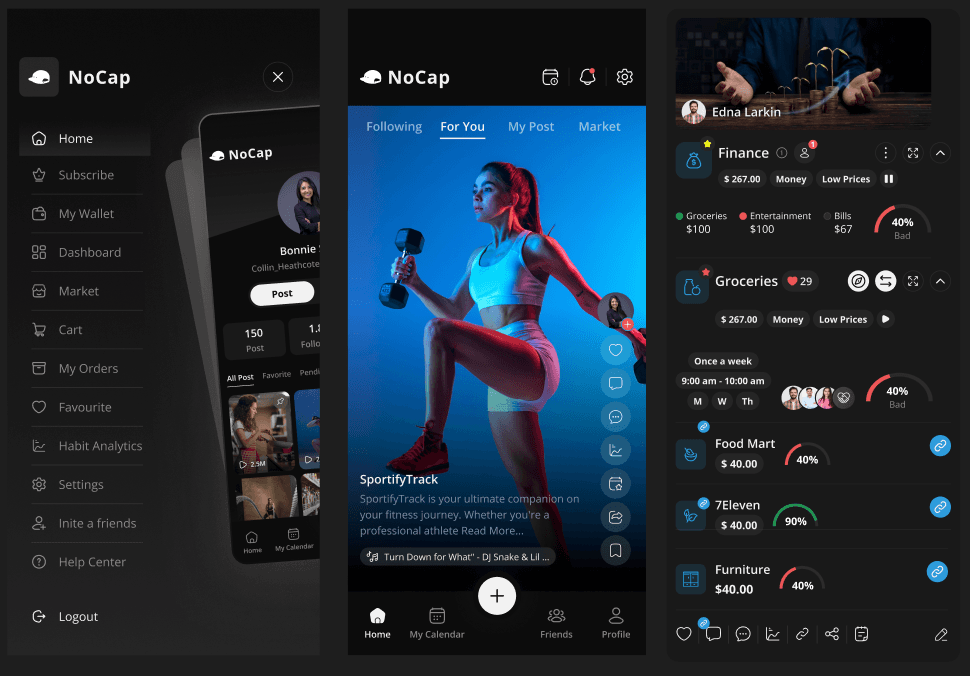
The Problem
Most habit trackers tell you when you're failing — but not what to do about it. Users who build habit stacks around specific items (like meals, routines, or purchases) often get stuck when a component isn't working. The only option is to manually research alternatives and rebuild from scratch, which most people simply don't do.
NoCaps tracks not just whether you completed a habit, but how well it's performing over time. When your score dips, the app knows something in your stack needs to change.
The Solution: NoCaps Swap
When your habit stack score falls below your target, NoCaps Swap steps in automatically. Instead of leaving you to figure it out, the AI surfaces a ranked list of stronger alternatives for any weak component — whether that's a Habit, a HabitLink, or an individual HabitLinkItem.
Swap suggestions are generated based on three data sources:
- Your personal specifications — your goals, budget, and past preferences
- Collective wisdom — patterns that have worked for other NoCaps users in similar situations
- Proven higher-scoring patterns — alternatives verified to produce better habit scores over time
How It Works
Step 1 — Score drops
NoCaps monitors each habit stack in real time. The moment a stack's performance score falls below threshold, the Swap indicator activates on that stack.
Step 2 — Identify the weak component
Inside the HabitLinks view, each item is scored individually. In the example below, a user's SteakAndFries and PepperoniPizza habit links are flagged. The AI pinpoints exactly which items — French Fries, Sliced Steak — are dragging the score down.
Step 3 — Review alternatives
Tapping Swap opens a ranked list of alternatives for that exact item, sourced from real providers. Each option shows its price and a color-coded AI rating:
- Green — strong match, recommended swap
- Red — poor fit for your current goals
For Sliced Steak, the AI surfaced options from Walmart ($9), Target ($10), and Publix ($9.90) as strong alternatives — versus 7Eleven ($20) and Cosco ($40) flagged as poor fits. For French Fries, Walmart ($0.80) and Publix ($0.90) ranked highest.
Step 4 — Swap and improve
One tap replaces the weak item with the selected alternative. The habit stack automatically recalculates its score. No rebuilding, no manual research — just a faster path to a higher-performing habit.
The Result
NoCaps Swap turns a frustrating dead-end into a one-tap fix. Users who engage with Swap suggestions recover their habit scores faster and are significantly less likely to abandon a stack entirely. Instead of starting from scratch, they simply swap and upgrade — keeping their momentum and their streak intact.
Try NoCaps Swap for yourself
Download the NoCaps app and let the AI find the upgrades your habits are missing.
Get early access → franck@donocap.com